


US, Costa Rica Seal Deal on Third-Country Deportations
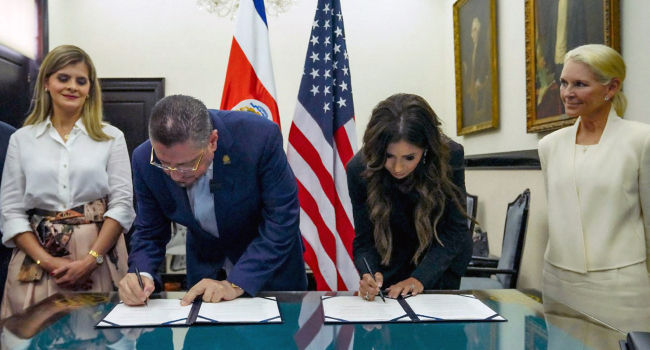
The United States and Costa Rica have formalised a new migration agreement allowing Washington to deport a limited number of migrants from other countries to the Central American nation each week. The deal marks another step in the US government’s intensified immigration enforcement strategy.

Under the arrangement, Costa Rica will receive up to 25 deportees weekly. Officials say the agreement is structured as a cooperative framework, with Costa Rica retaining the authority to refuse entry to individuals or specific nationalities.
Costa Rican President Rodrigo Chaves described the pact as voluntary, emphasising that it aligns with the country’s legal standards and human rights obligations. He noted that participation does not compel the country to accept all deportation requests.
The agreement was signed alongside US officials, including Kristi Noem, who now serves as a special envoy under a regional security initiative aimed at combating organised crime networks across Latin America.
Noem, a prominent figure in US immigration policy, recently transitioned from her previous leadership role at the Department of Homeland Security. Her successor, Senator Markwayne Mullin, has been confirmed to oversee the agency.

The deportation deal forms part of a broader regional effort, with countries such as El Salvador and Panama also agreeing to accept migrants removed from the United States under similar arrangements.
However, the policy has drawn criticism from international organisations, which have raised concerns over potential human rights violations linked to the relocation of migrants to third countries.
Legal challenges have also emerged, with opponents questioning the legality and humanitarian implications of transferring deportees to nations that are not their countries of origin.
Despite the backlash, US authorities maintain that such agreements are necessary to manage migration flows and strengthen regional cooperation on security and border control.


Comments